
The program that asks students to become useful
Not every important Sullivan story happens during Sullivan Weekend, and not every meaningful act of formation looks like a retreat. Some programs matter because they move students out of reflection and into responsibility. The Sullivan Service Corps is one of those programs.
Luke Lingle describes Service Corps at its best as more than an internship. He calls it “an immersive formation experience.” Students, he said, are “not observers or short-term volunteers; they are embedded in real organizations doing real work that matters.” What makes the model distinctive is the combination of meaningful contribution, structured reflection, and community. Students are not simply logging hours. They are testing vocation against reality.
That is why Service Corps occupies such an important place in the Foundation’s emerging public narrative. If Ignite often helps students identify a direction, and Fellows helps deepen the habits needed to sustain that direction, Service Corps asks whether a student can carry those commitments into the texture of work that is practical, ambiguous, and accountable to others. It is one thing to talk about contribution. It is another thing to become the person who can actually make one.
What the pilot revealed
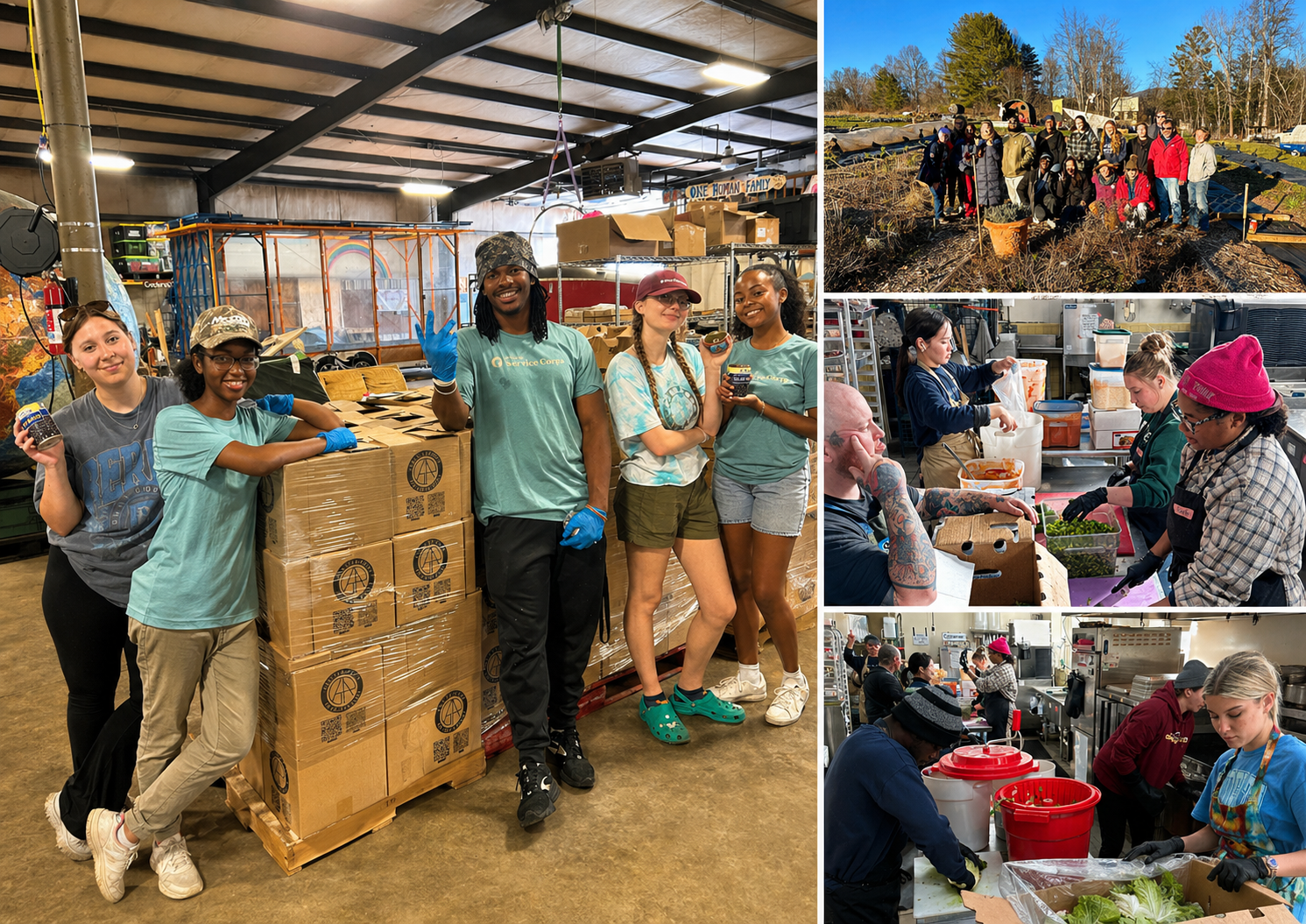
Lingle’s description of the pilot makes the program easier to grasp. In its initial form, Service Corps brought together eight students from six universities and placed them in teams serving four social enterprises in Asheville. What stayed with him were the moments when students recognized the consequence of their work. “Those moments of responsibility and ownership are where the program really came alive,” he said. A presentation influenced a partner’s next step. A project stopped feeling theoretical. The work began to carry real stakes.
That may be the central insight of Service Corps. Students often begin with generous but abstract ideas about service and impact. Then they step into a real context and learn that communities are complex, organizations have constraints, and meaningful work rarely unfolds according to clean classroom timelines. Yet Lingle says what has been most encouraging is how quickly students rise to the occasion. When they are given real responsibility, and enough support to meet it, they often take ownership faster than many adults expect.
This is exactly the kind of learning that stays with a person. It is embodied. It cannot be reduced to a slogan. Students remember the deadline they had to meet, the ambiguity they had to navigate, the partner they did not want to disappoint, the team member who relied on them, and the moment they realized their work could actually help move something forward.
What students are actually doing
Service Corps is not built around vague service rhetoric. Lingle describes the day-to-day work in practical terms. Students contribute through “research, strategic planning, storytelling, operations support, and sometimes direct community engagement.” Their days include team collaboration, check-ins with site leaders, independent work, and structured reflection. “It’s a blend of professional experience and intentional learning, closer to a small consulting team than a traditional internship,” he said.
That last part matters as much as the first. The Foundation is not simply trying to place students in busy environments and hope learning happens accidentally. Reflection gives the experience its interpretive depth. It helps students notice how responsibility feels, how relationships shape outcomes, how judgment develops, and where vocation begins to come into view. Professional skill matters here, but the goal is larger than job training. The goal is to help students become thoughtful contributors who can work well, serve humbly, and understand what meaningful responsibility demands of them.
Lingle makes another useful distinction when he talks about experiential learning. In Service Corps, he says, students are not discussing hypothetical case studies. They are “navigating ambiguity, making decisions, and seeing the consequences of their work.” That kind of learning, he added, “builds not just knowledge, but judgment, confidence, and resilience.”
Listening before fixing
One of the strongest elements in Lingle’s explanation of Service Corps is his insistence on posture. Students are entering communities that already possess assets, leadership, and history. “Their role is not to ‘fix’ anything, but to listen, learn, and contribute with humility,” he said. He frames their work around stewardship, “of relationships, of trust, and of the opportunity to serve.”
That framing is more important than it may first appear. Many young people are drawn to service because they are sincere, but sincerity by itself can still become paternalism if it is not disciplined by listening. Service Corps tries to form students in a better way. Lingle says the work is framed around stewardship: stewardship of relationships, of trust, and of the opportunity to serve. That posture changes how students show up with partners. It also changes how partner organizations experience them. The best hosts are not simply receiving free labor. They are collaborating with students who are there to learn, contribute, and respect what is already present.
This is one of the reasons Service Corps fits so naturally within the wider Sullivan tradition. The Foundation has long emphasized service above self and leadership rooted in character. Service Corps translates those values into on-the-ground practice. It reminds students that contribution is not measured by enthusiasm alone. It is measured by how responsibly, humbly, and effectively a person enters work that belongs to a real community.
What partners and students gain
According to Lingle, faculty appreciate the way Service Corps integrates academic learning with real-world application. Partners, meanwhile, often note that students bring “energy, creativity, and fresh perspective.” He has also been encouraged by how quickly students take ownership when given genuine responsibility. “When given real responsibility and the right support, they step into it,” he said.
Students, for their part, gain things that are difficult to obtain in a classroom alone. Lingle points to a clearer sense of vocation, stronger teamwork, the ability to navigate ambiguity, and a better understanding of how to contribute to something larger than themselves. Unlike a typical internship that may focus mainly on career credentials, Service Corps is intentionally designed to integrate personal formation with professional development.
That combination may become one of the program’s most attractive strengths for sponsors and families alike. It can appeal to those who care about workforce readiness because students are doing consequential work in real organizations. But it can also appeal to those who care about character and service because the work is being interpreted through reflection, stewardship, and communal responsibility. In other words, Service Corps avoids the false choice between practical preparation and moral formation. It insists on both.
The future of the Corps
Lingle says the near-term hope is to deepen the program by refining the curriculum, strengthening partnerships, and expanding the number of students and sites. Longer term, he said, “the vision is to build a network of Service Corps experiences across multiple communities, creating a pipeline of young leaders formed through real engagement with social impact work.” That ambition feels large, but it is grounded in a practical pilot rather than a speculative dream.
The Foundation’s website suggests that growth is already underway. The website points toward another Asheville-based Service Corps season in 2026, and the Foundation calendar lists May 27 through June 28, 2026, for Sullivan Service Corps in Asheville. It describes a five-week internship track and signals broader access points as the model develops. That matters because it means Service Corps is no longer merely an experiment sitting on the shelf. It is becoming part of the Foundation’s clearer pathway from purpose to practice.
For supporters, this is the moment when investment can have outsized effect. Lingle says likely sponsors include local businesses, family foundations, and community foundations that care about leadership development, workforce readiness, and community impact. “They are not just funding a summer experience,” he said. “They are investing in the formation of a future leader.”
Why Service Corps deserves more attention
Service Corps may turn out to be one of Sullivan’s most persuasive programs precisely because it is so hard to sentimentalize once you understand it. It does not ask readers to admire service from a distance. It asks whether students can become useful in the company of people already doing hard things. It asks whether values can survive contact with schedules, deadlines, collaboration, uncertainty, and community reality.
That is why the program deserves attention from students, faculty, alumni, host organizations, and underwriters. Students who feel ready for more than reflection should see in Service Corps a chance to test themselves in real work. Faculty should see a rare bridge between intellectual development and lived responsibility. Alumni should recognize an opportunity to mentor, open doors, or help connect the Foundation with organizations that would make excellent hosts. Donors should see one of the clearest opportunities to fund formation that has visible consequences.
At its core, Lingle says, Service Corps is about formation at the intersection of leadership development, community engagement, and vocational discernment. “The goal is not just to prepare students for their first job, but to help them become thoughtful, capable leaders who can contribute meaningfully wherever they are called,” he said.
In a time when many programs promise impact in airy language, Service Corps offers something sturdier. Responsibility. Reflection. Work that matters. And students who begin to discover, not in theory but in practice, that service can become a way of life when someone finally trusts them with something real.
Back to all News items.