
Every enduring program has two histories. One can be told through dates, locations, attendance numbers, and program names. The other is carried by people. It lives in the student who speaks in front of a group for the first time, the faculty member who recognizes a new way to mentor, and the graduate who returns years later to help someone else begin.
The history of the Sullivan Ignite Retreat belongs to both kinds.
For more than a decade, Ignite has brought students together for concentrated weekends of reflection, relationship-building, and practical work. The premise has remained steady even as the program has evolved: young people are more capable of contributing to their communities when they understand themselves, listen across difference, and receive both encouragement and useful tools.
At first glance, a retreat may seem like a pause from real life. Ignite works differently. The distance from campus creates enough room for students to hear themselves think, but the weekend continually points back toward action. Participants ask what matters to them, what problems they feel drawn to address, and what they can do when they return home.
Over time, the retreat has become more intentional about meeting students at different stages. Today, Ignite offers three tracks. The Personal Track focuses on self-discovery, values, confidence, and purpose. The Problem Track helps students investigate an issue and imagine responsible responses. The Project Track supports students who are already building an initiative and want to strengthen it.
The tracks reflect a lesson learned through years of working with students: there is no single correct doorway into service and leadership. One student arrives with a detailed plan. Another arrives with a question. A third arrives unsure of what they can offer. All three may be ready for Ignite.
This openness is important. Too many students assume leadership opportunities are intended for people who are already confident, already connected, or already able to describe a life plan in polished language. Ignite begins from a different belief. Leadership is not a personality type. It is a practice that can be strengthened.
Students feel that distinction quickly. Taylor Marshall, who attended in spring 2026, said the opening activities “seemed to skip the fluff.” She continued, “We got into the nitty gritty almost instantly and I found that that made more meaningful connections and conversations.”
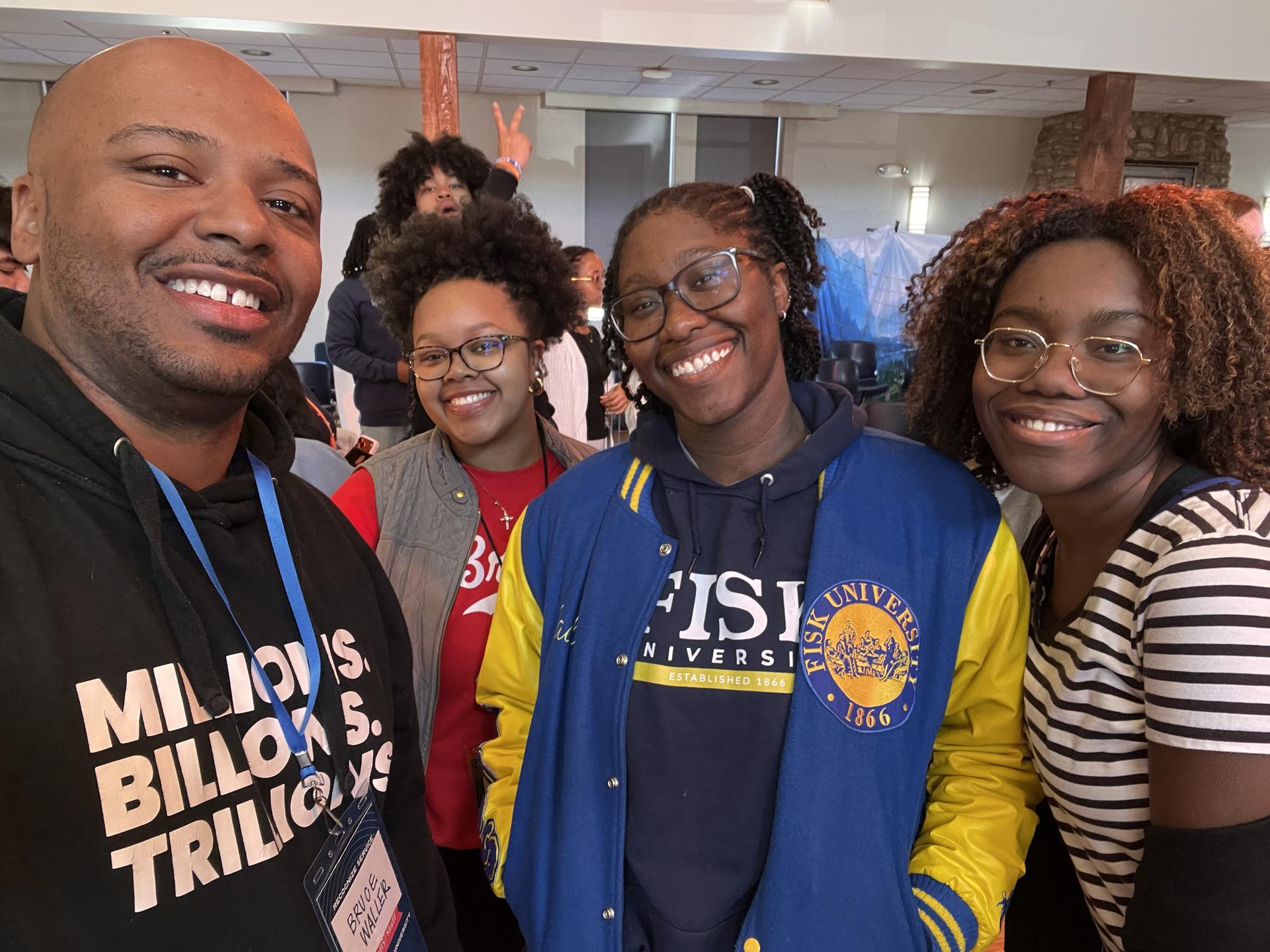
Those connections have become one of Ignite’s defining features. Students meet peers from campuses they may never have visited. They discover that a concern that felt isolated at home is shared by someone several states away. They also encounter differences that complicate their assumptions. The weekend becomes a reminder that community work is both local and relational. Ideas travel, but they must be adapted with care.
Ignite has also grown within a larger Sullivan learning community. Sullivan Weekend now brings the Ignite Retreat together with the Fellows Summit and Faculty Forum at Lake Junaluska, outside Asheville, North Carolina. Students developing personal confidence, Fellows pursuing a multi-year leadership journey, and faculty members strengthening campus support all share the same landscape and, at key moments, the same conversation.
That design creates useful crossings. A student can see that there is a path beyond the first weekend. A faculty member can better understand what students are experiencing. A Fellow can recognize that leadership includes welcoming someone who is just beginning. The event becomes more than three programs sharing a location. It becomes an ecosystem of people learning how to serve with greater wisdom and courage.
The Foundation’s broader reach shows how far the work now extends. More than 3,000 students have participated in Sullivan programming, and more than 350 faculty and staff members have received training across a network of more than 70 partner institutions. In participant feedback, 90 percent have ranked Sullivan programs among the best they have attended. Students have reported meaningful gains in confidence and in their knowledge of mission-driven innovation.
Numbers provide scale, but the students explain the experience. Gracyn Begley recalled a Personal Track workshop in which participants became “very open and vulnerable.” She wrote, “It made me feel really good to actually take a second to evaluate my emotions.”
Madelyn Bush carried away a different lesson: “Your impact matters over your intention.” It is the kind of sentence that can alter how a person approaches service. Good intentions may begin the work, but they do not exempt anyone from asking whether the work is useful, welcome, and accountable to the people involved.
That emphasis has helped Ignite develop from an inspiring weekend into a launching point. Students leave with practices they can use immediately, relationships they can sustain, and access to a wider set of Sullivan opportunities. Some continue into the Fellows Program. Some refine an impact enterprise or explore Sullivan Impact Venture Labs. Some return to campus with a less visible but equally important change: the confidence to begin a conversation, invite a partner, or volunteer for responsibility.
Josh Nadzam, the Foundation’s vice president of programs, has seen how much the event depends on the students themselves. Reflecting on a recent group, he said participants “opened up to us and each other quite quickly and were invested in making connections, learning, and being present.”
That willingness cannot be manufactured, but it can be welcomed. Ignite’s facilitators create the conditions for honest participation through small-group work, reflection, creative exercises, coaching, and opportunities to practice communicating an idea. The retreat does not promise that every student will leave fearless. It helps them discover that fear does not have to make the decision.
The setting matters, too. Lake Junaluska offers a physical rhythm different from the campus week. Meals are shared. Conversations continue between sessions. A walk can make room for a thought that would not surface under fluorescent lights. Students are not removed from responsibility. They are given space to understand it more clearly.
As Ignite has grown, so has the need to make the experience available to more students. Registration fees, travel, staffing, materials, lodging, and meals are practical realities. For some campuses and families, those costs can determine whether a student ever reaches the room where a new sense of possibility begins.
This is where donors and partner schools enter the history.
A gift through the Sullivan Impact Fund is not simply support for an event on a calendar. It can become the room where a student is taken seriously. It can become the conversation that helps a young person recognize a calling. It can become the coaching that turns concern into a responsible plan, or the relationship that keeps a student moving after the first attempt becomes difficult.
Gifts go to the Sullivan Impact Fund, a public charity. 100% of your gift supports student opportunity at the Sullivan school or program you select, not Sullivan overhead. Funds are held in trust and used only for those designated purposes. That means a gift can stay connected to a campus the donor knows while opening doors into a network much larger than any one institution.
The return is not measured only in a weekend’s attendance. It appears later, in students who lead with more self-awareness, build stronger partnerships, and bring disciplined imagination to the needs around them. It appears when an Ignite participant becomes a Fellow, a mentor, a founder, a nonprofit leader, a teacher, or the neighbor who knows how to gather people around a difficult question.
Ignite’s history is still being written because each cohort changes what the program can become. The essential invitation remains the same: come as you are, pay attention, listen well, and take the next faithful step.
The fall 2026 Ignite Retreat will take place October 9 through 11 at Lake Junaluska, outside Asheville, North Carolina, as part of Sullivan Weekend. To sponsor a student or support Sullivan programming, make a gift through the Sullivan Impact Fund and designate the school or program you wish to support.
Back to all News items.