There is a familiar moment in the life of a college student when leadership stops being an idea and becomes a responsibility. The student has been elected, selected, or simply noticed. Other people have begun to look in that student’s direction. A title may arrive, but certainty usually does not. The harder questions follow. What kind of leader will I be? What do I do when a group disagrees? How do I turn conviction into useful action? How do I know whether my work is serving the community or merely reflecting my own ambition?
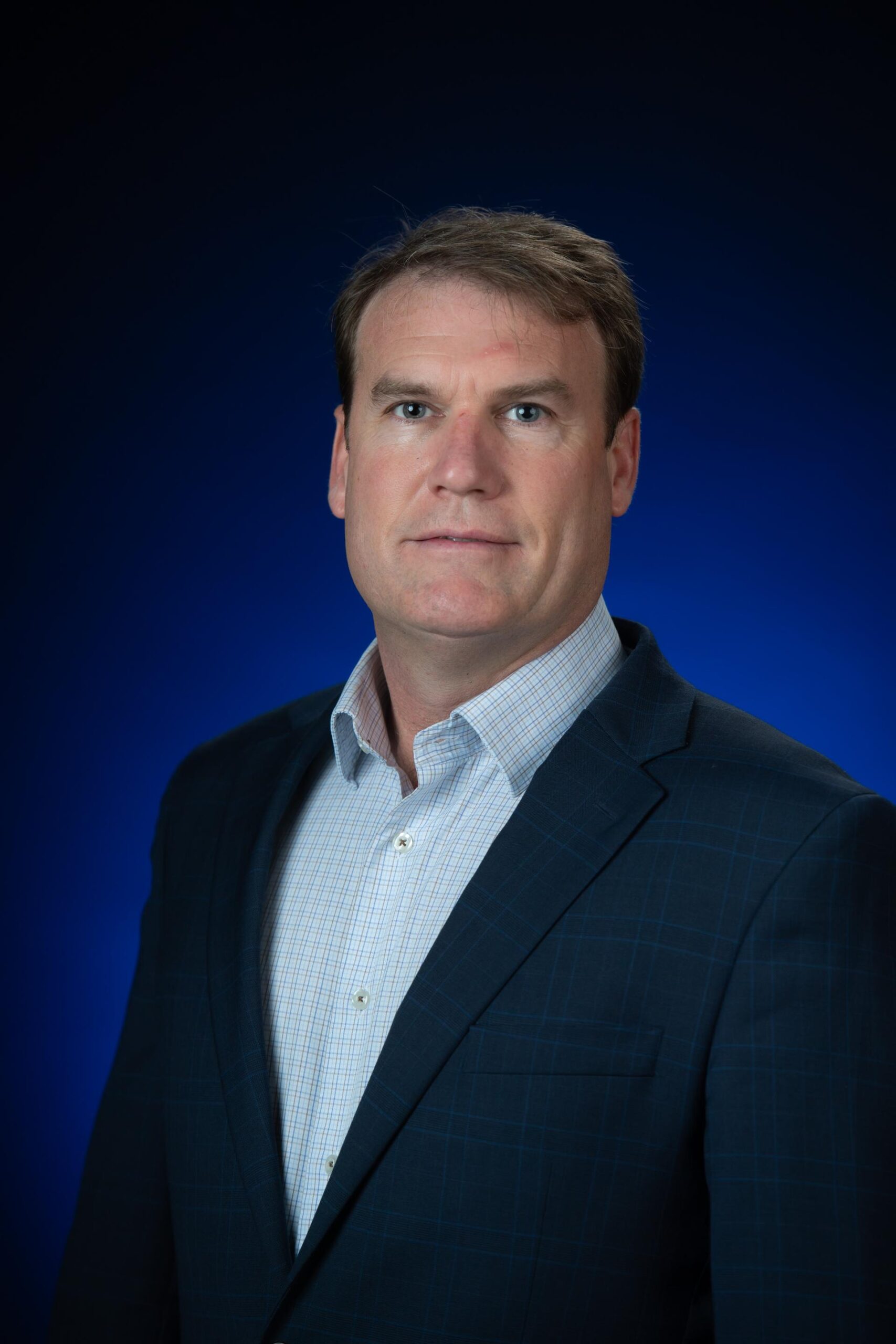
Dr. Jody Holland has built much of his career around those questions. An associate professor in the Department of Public Policy Leadership at the University of Mississippi, Holland teaches in areas that sit close to the daily work of communities: public policy, food policy, economic development, nonprofit management, grant writing, and leadership development. He is also the executive director of LOFT and the founder of Holland Consulting Group. Across those roles, he has helped organizations secure more than $4 million in grants and has contributed more than 30 peer-reviewed publications to his field.
Yet the most revealing part of his work may be the way he asks young people to understand leadership before they try to perform it.
Holland serves as faculty director for the Sullivan Fellows Program and helped create its curriculum. The program is grounded in a progression The Algernon Sydney Sullivan Foundation calls ARC: Agency, Relationships, and Contribution. The sequence matters. Students begin by developing a clearer understanding of themselves, including their values, strengths, habits, and sense of purpose. They then learn how to build relationships across differences. From that foundation, they are better prepared to make a contribution that is thoughtful, collaborative, and durable.
In a draft case study of the program, Holland and his coauthors write that “meaningful community impact requires a foundation of individual self-awareness.” It is a concise sentence, but it carries a large idea. Leadership begins before the meeting, before the speech, before the plan. It begins with the difficult work of examining one’s motives and learning to recognize the effect one has on other people.
That is also why faculty and staff are so essential to the Sullivan model. Students do not learn leadership in a vacuum. They need adults who can challenge them without diminishing them, who can offer structure without taking away ownership, and who can recognize growth even when the result is not yet polished. The Sullivan Faculty Forum gives those educators a place to strengthen that practice together.
Held during Sullivan Weekend at Lake Junaluska, outside Asheville, North Carolina, the Faculty Forum brings together faculty and staff from Sullivan partner schools. The setting is collegial, but the purpose is serious. Participants consider how to help students move from interest to commitment, how to guide mission-driven work on campus, and how to create learning environments in which service and leadership are connected to reflection, accountability, and action.
Holland’s work offers a useful lens for that conversation. In the Year Two curriculum he prepared for the Fellows program, he puts the transition plainly: “You’ve learned how to lead people. Now you’ll learn how to lead change.”
That movement from people to change is not a rejection of relationships. It is the result of taking relationships seriously. Students learn that a promising idea is not enough. They must understand the people affected by a problem, invite those people into the work, test assumptions, listen to criticism, and adapt. They must become capable of staying present when a project is slow, a partnership is complicated, or a first attempt falls short.
The Fellows curriculum makes that development visible. During Year One, students build leadership literacy through guided reflection, experiential learning, and conversation with peers. Holland uses the word INSPIRED as a framework for the qualities the program seeks to cultivate: Introspective, Nimble, Service-Oriented, Purposeful, Influential, Relational, Emotionally Intelligent, and Determined. These are not decorative adjectives. Together, they describe a person who can understand a situation, work with others, and keep moving when the easy answer disappears.
The early evidence is encouraging. A post-program survey of 26 Fellows found strong gains across the Agency competencies, along with high satisfaction and meaningful self-reported growth in confidence and self-awareness. The numbers matter, but the students’ own language gives them texture. One Fellow wrote, “I now have knowledge at a young age that probably takes others years into their career to learn.” Another observed, “This experience helps you talk out problems with people that you normally wouldn’t talk to. Perfect for the business world.”
Those comments point to a quality that can be missed in discussions of leadership. Good leadership is not simply the ability to persuade people who already agree with you. It is the discipline of staying in conversation with people who do not share your background, your vocabulary, or your first conclusion. That capacity has value in a company, a nonprofit organization, a classroom, a city council meeting, and nearly every other place where people must make decisions together.
The Faculty Forum gives educators a chance to practice the same openness they hope to develop in students. Participants arrive from different campuses, fields, and professional roles. They compare what is working, name what remains difficult, and return home with colleagues they can call when a new challenge appears. The network is part of the learning. It reminds participants that none of them has to solve the work of student development alone.
Holland’s own career reflects that crossing of boundaries. Scholarship informs practice. Teaching informs community work. Grant writing becomes a means of turning local priorities into funded action. Leadership development becomes more than a workshop topic because it is connected to public policy, economic opportunity, food systems, and the daily decisions that shape people’s lives.
For students, this approach replaces the fantasy of the solitary leader with something more demanding and more hopeful. Leadership is not a performance by one unusually gifted person. It is a practice of attention, judgment, relationship, and contribution. It asks a student to know who they are, to notice who is missing, and to accept responsibility for what happens next.
Holland summarizes the promise of the second year of Fellows in another direct sentence: “Leadership without direction is just influence. Year Two gives you direction.” The same principle applies to faculty development. Caring about students is the beginning. Educators also need shared language, tested practices, and a community that can help turn care into direction.
That is the invitation of the Faculty Forum. It is a weekend for educators who believe students can grow into the kind of leaders their communities need, and who understand that such growth rarely happens by accident.
The 2026 Sullivan Faculty Forum will take place October 9 through 11 at Lake Junaluska, outside Asheville, North Carolina, as part of Sullivan Weekend.
Back to all News items.