Some leadership stories begin with a title.
A student is elected president. A chapter chooses a new executive team. A campus organization places a young person in charge of meetings, budgets, expectations, conflict, accountability, communication, alumni relationships, and the immediate pressure of being responsible for other people.
The title comes first. The training often comes later, if it comes at all.
That gap is where The Algernon Sydney Sullivan Foundation sees an important opportunity.
Through its Fellows Program, Ignite Retreats, faculty engagement work, and leadership development model, the Foundation has spent years helping students move beyond the idea of leadership as status, personality, or ambition. Sullivan leadership is not simply about being impressive. It is about becoming useful. It is about learning to take responsibility, build trust, serve others, and turn good intentions into meaningful action.
Now, that same leadership model is being adapted for a student community where the need is immediate, visible, and often underestimated: Greek life.
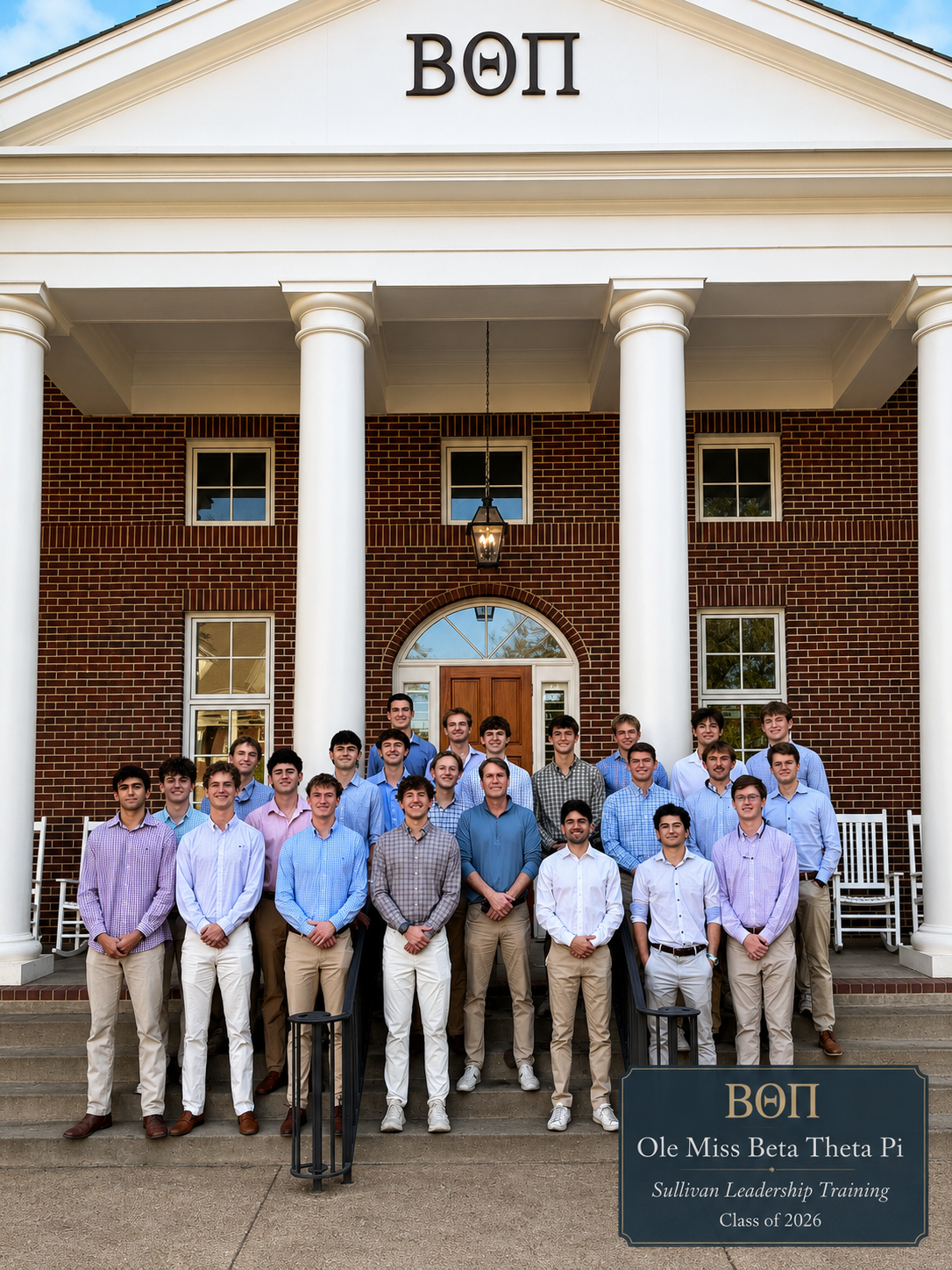
At the University of Mississippi, the Beta Beta Chapter of Beta Theta Pi recently placed 30 members, including roughly 12 members of its executive team, through leadership training developed from the Foundation’s Fellows ARC Leadership framework. Built around Agency, Relationships, and Contribution, ARC gives students a practical way to understand leadership as more than a role. It asks them to think about responsibility, trust, service, and the impact their decisions have on the people and communities around them.
For the Ole Miss Beta Chapter, the training was not simply a program to complete. It was a response to the realities of leading a large and growing fraternity.
“With a chapter our size, leadership cannot be something we just hope happens naturally,” said Zach Moreth, president of the Beta Beta Chapter of Beta Theta Pi at Ole Miss. “The Sullivan training gave our executive team a way to think more seriously about responsibility, relationships, and the kind of chapter we want to build. We got a great deal out of it, and our plan is to make this an annual part of how we prepare our leaders.”
The need is clear.
Fraternities, sororities, and other student-led organizations are often large, complex communities run by young people who have had little formal leadership training. At Ole Miss, where Greek life is a major part of campus life and where chapters can include hundreds of members, the stakes are especially high. Student officers may be responsible for member accountability, chapter culture, risk management, budgets, philanthropy, service, recruitment, events, communications, parent expectations, alumni engagement, and relationships with the university and national organization.
Many of those students are 19, 20, or 21 years old.
They are asked to lead peers who are also their friends. They are expected to make decisions that affect safety, morale, reputation, finances, and the future health of the organization. They may be elected because they are dependable, popular, respected, ambitious, or willing, but that does not mean they have been been given the tools to handle the real challenges that come with leadership.
That is not a criticism of the students. It is a recognition of what they are being asked to shoulder.
“The Beta Beta Chapter has grown to more than 350 members, and that kind of size changes the leadership challenge,” said Kevin J. Seddon, Chapter Advisor for the Ole Miss Beta Chapter and a member of the chapter’s Housing Corporation and Association Board of Directors. “Our board recognized that this training was not optional or ornamental. It was becoming imperative. When students are responsible for an organization of this scale, they need more than enthusiasm and good intentions. They need a framework for leading well.”
That framework is what Sullivan brings.
The Foundation’s Fellows Program has long helped students ask deeper questions about themselves and their work in the world. The ARC model gives that work a clear structure. Agency asks students to take ownership of their choices, habits, voice, and direction. Relationships asks them to understand that leadership is not practiced in isolation. It requires listening, trust, collaboration, conflict resolution, humility, and the ability to work with people who do not always think, speak, or act the same way. Contribution asks the question that gives leadership its moral center: what is this leadership for?
That model has obvious value for students pursuing social impact projects, service work, campus initiatives, or community-based leadership. It also has immediate value for students in Greek life, where leadership comes at them fast and carries real consequences.
Dr. Jody Holland, who teaches leadership at the University of Mississippi and works in connection with the Trent Lott Leadership Institute and Public Policy Leadership, has written and taught about the challenge young leaders face when responsibility comes before preparation. Dr. Holland led the Beta chapter’s training sessions on behalf of the Foundation and has been instrumental in the development of the Foundation’s Fellows Program leadership initiative. According to Holland, students want to lead. They want to do meaningful work. They want to serve well. But many have not yet been given a clear way to understand leadership as a practice rather than a position.
That distinction matters.
A title can put a student at the front of the room. Training helps that student understand what to do once he gets there.
The Sullivan Greek Leadership Training concept begins with a simple but urgent idea: student leaders need preparation before, during, and after they hold office. They need more than officer manuals, parliamentary procedure, or risk management reminders. Those things matter, but they’re not enough. Students also need to learn how to make decisions, handle conflict, create healthy organizational culture, hold peers accountable, build trust, and connect their leadership to service beyond themselves.
That is why Beta Beta’s initiative matters.
The chapter recognized that a strong fraternity does not depend only on recruitment numbers, social activity, alumni support, or a new or expanded house. It depends on the quality of the students who lead it. It depends on whether those students understand responsibility. It depends on whether they can think beyond the next event, the next meeting, or the next problem. It depends on whether they can build a culture worthy of the organization they represent.
For Sullivan, the work is a natural extension of its mission.
The Foundation has long believed that young people are capable of serious leadership when they are given meaningful training, guidance, and opportunities to practice. The Fellows Program is one expression of that belief. Ignite Retreats are another. The Foundation’s faculty programs, Service Corps, coaching, and social impact work all point toward the same larger purpose: helping students become the kind of leaders who can serve communities with wisdom, courage, and purpose.
Greek life offers a powerful place for that training to take root because fraternities and sororities are already leadership laboratories. The question is whether those laboratories are intentional.
A student can learn leadership accidentally. He can learn it by making mistakes, imitating older members, reacting to crises, or simply trying to survive the demands of office. Sullivan’s approach suggests a better way. Leadership can be taught with language, structure, reflection, mentoring, and practice. Students can be asked to think about who they are becoming, not merely what they are managing.
Many campuses are concerned about student organization culture, risk, belonging, leadership, mental health, civic responsibility, and the need for students to build practical skills for life after college. Greek life is too often discussed only when something goes wrong. A Sullivan approach allows institutions to ask a more constructive question: what would happen if we invested in these student leaders before the crisis, before the mistake?
Leadership training that is both service-driven and character-driven can help universities support student organizations without reducing leadership to compliance. Compliance matters. Safety matters. Accountability matters. But students also need a positive vision of leadership. They need to understand what they are working toward, not only what they are being warned against.
That is where Beta Beta’s example becomes important.
The Sullivan model begins with a Leadership Launch Seminar, giving a broad group of students an introduction to ARC and the habits of service-driven leadership. It deepens through a Leadership Impact Certificate, where a smaller cohort participates in workshops, leadership labs, reflection, and mentoring. From there, students who want to go further can be invited into the Sullivan Fellows pathway, where leadership development becomes part of a broader journey of service, community engagement, and social impact.
That progression matters because leadership is not developed in one afternoon.
A seminar can open the door. A certificate can build habits. A Fellows pathway can shape a student’s understanding of purpose, responsibility, and service. Together, they create a ladder of opportunity for students who first encounter Sullivan through a fraternity, sorority, or student organization, then discover a broader community committed to service-driven leadership.
The work at Ole Miss is still developing, but its direction is clear.
The Sullivan Foundation’s Greek Leadership Training is not a departure from its mission. It is an extension of it. The same Foundation that honors students for service, gathers them for Ignite, develops them through Fellows, and connects faculty across its network can also help students lead the organizations they already inhabit. The same ARC framework that helps Fellows think about social impact can help chapter officers think about responsibility, culture, and contribution.
For Beta Beta, the work begins with a chapter that saw a need and chose to act. For Ole Miss, it offers a possible model for strengthening leadership across a large and influential Greek system. For The Algernon Sydney Sullivan Foundation, it is another expression of a long-standing conviction: when young people are given the right training, guidance, and encouragement, they can become the kind of leaders their communities need.
Back to all News items.