A Better Way to Describe Sullivan Programming
As Sullivan Weekend approaches, we find ourselves returning to a basic question that deserves a clearer answer than we sometimes give it: What exactly is Sullivan programming?
Too often, people encounter one part of the Foundation’s work and assume they understand the whole of it. They hear about Ignite and think Sullivan Weekend is simply a student retreat. They hear about Fellows and think it is just another leadership seminar with a longer timeline. They hear about Service Corps or the Impact Prize and assume these are stand-alone initiatives only loosely connected to the rest of the Foundation’s work.
That is not quite right.
What the Foundation has built is better understood as a pathway, one grounded in experience, shaped by relationships, and organized around the ARC Leadership Model: Agency, Relationships, and Contribution. That language matters because ARC is not decorative language or a slogan placed on top of programming after the fact. It is the framework that helps explain how growth happens. Students first begin to understand their own agency, then learn how to build meaningful relationships and work with others, and finally move toward contribution, where values become action and action becomes service.
Seen that way, Sullivan Weekend is not the whole story, but it is one of the clearest places to see the story unfolding.
Sullivan Weekend Is the Gathering, Not the Program
The first distinction worth making is the simplest one. Sullivan Weekend is the umbrella. It is the gathering. It is not the name of one single program.
Under that umbrella sit several distinct tracks that serve different audiences and different stages of development. In the spring, Sullivan Weekend brings together the Ignite Retreat, the Fellows Summit, and the Faculty Forum. These programs belong together, but they are not interchangeable. Each has its own purpose, its own rhythm, and its own audience.
That distinction matters because the weekend works precisely by holding different kinds of work together without flattening them into sameness. One student may arrive still trying to name a calling. Another may already be working on a project. A Fellow may be returning for deeper formation. A faculty member may be there to sharpen the craft of teaching and to better support students back home on campus. All of that can happen at once because Sullivan Weekend is designed as a shared gathering place, not a one-size-fits-all event.
Ignite Retreat: The Entry Point for Many Students
For many students, Ignite is where the Sullivan path begins.
That is part of what makes it so important. Ignite is broad and invitational. It is an entry point, not a finishing point. It does not ask students to arrive fully formed. It meets them where they are and helps them take a next step.
Some students come to Ignite with only the faint outline of a calling. They know they want their lives to matter, but they cannot yet name how. Some arrive with a problem already on their minds, a social challenge, campus issue, or community need they feel drawn to address. Others arrive with an actual project, an initiative, organization, or early idea they are trying to shape into something more concrete. Ignite makes room for all three.
That is why the retreat’s structure is so useful. It recognizes that purpose does not always appear fully articulated. Sometimes it begins as restlessness. Sometimes as concern. Sometimes as conviction. Ignite gives students clarity, confidence, and community at that early stage. It helps them name what matters, test early ideas, and gain practical traction.
In that sense, Ignite is not merely inspirational. It is catalytic. It’s transformative. It helps students move from vague concern to directed intention. It is where many students first begin to understand that leadership is not just about title or charisma, but about responsibility, imagination, and action.
Fellows Summit: A Deeper Arc of Formation
If Ignite is often the spark, Fellows is the deeper formation experience that helps students sustain their fire.
This is one of the most important distinctions in the Foundation’s programming. Ignite is broad and invitational. Fellows is more cumulative and demanding. Ignite helps students find traction. Fellows helps them build a longer arc.
What makes Fellows so important is that it treats leadership development as formation over time. Students are not simply encouraged once and then sent on their way. They are guided through a more sustained process of reflection, accountability, mentoring, and practice. The point is not only to help them ask what they care about, but to help them become the kind of people who can carry those commitments into the future with steadiness and integrity.
This is also where ARC becomes especially helpful as a way of describing the work. Agency asks students to consider who they are, what responsibility is theirs, and what kind of leader they want to become. Relationships asks them to build with others, to listen, collaborate, and understand that meaningful leadership is never purely solitary. Contribution asks what their leadership is ultimately for. It presses them toward impact, service, and the public good.
That progression gives Fellows its shape. It is not leadership in the abstract. It is leadership practiced, tested, and deepened over time. It is not just about ambition. It is about growth in character, community, and contribution.
Faculty Forum: The Parallel Track That Strengthens Campuses
The Faculty Forum is different again, and its difference matters.
It is not a student retreat, though it unfolds alongside student work. It is the dedicated Sullivan Weekend track for faculty and staff, a place for professional development, collaborative learning, and the exchange of ideas among campus partners who are helping shape the conditions in which students grow.
In many ways, the Faculty Forum is one of the smartest parts of Sullivan Weekend because it recognizes something simple and true: students do not do values-based leadership work in isolation. They do it in conversation with faculty mentors, staff leaders, and campus professionals who challenge them, support them, and create the kinds of environments in which purpose can take root.
Faculty Forum invests in those people. It treats teaching, mentoring, and program-building as a shared craft. It strengthens the adults who return to campus ready to support student development more effectively. That parallel structure is one of the reasons Sullivan Weekend has such depth. Students are learning. Faculty and staff are learning too. The work becomes mutual, not siloed.
What Comes After the Weekend
Sullivan Weekend is significant, but it is not the whole map. It is one gathering point within a broader pathway.
Some students begin at Ignite and continue into Fellows. Others move into hands-on, high-accountability experiences beyond the weekend, where leadership is no longer mostly reflective or aspirational, but embodied in real work.
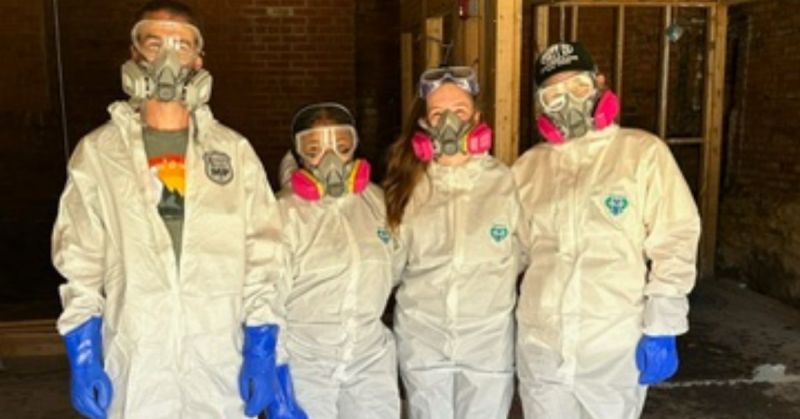
Service Corps is one of the clearest examples. It is not primarily about identifying what a student cares about. It is about entering community work and discovering what service looks like when it is practical, collaborative, tiring, scheduled, and accountable to real people and real needs. It is hands-on community engagement and mission-driven work for the public good. In that sense, Service Corps is one of the Foundation’s most concrete expressions of leadership in practice.
The same is true, in a different way, of the Foundation’s Study Abroad experience. There, students encounter leadership development through global learning, experiential education, and exposure to different contexts, questions, and ways of thinking. The purpose is not travel for its own sake. The purpose is intellectual and personal expansion that deepens how students understand leadership, innovation, and contribution.
Then there is the Impact Prize, which gives students and young alumni the opportunity to test whether an idea can become a real and useful solution. If Ignite helps a student discover direction, and Fellows helps build long-term capacity, the Impact Prize helps move an idea into proof. It asks whether a concept can stand up in the world, attract support, and begin making a tangible difference.
Why This Matters, and Why Support Matters
All of this is why it’s so important to describe Sullivan programming more clearly.
The Foundation is not offering a random collection of events. It is building a developmental pathway. Students enter at different points. They grow in different ways. They are invited into deeper levels of responsibility, reflection, and service. Faculty and staff help sustain that growth. Alumni help extend it. And donors make it possible for more students and campuses to participate.
That is the practical side of this conversation. The Foundation invests more than $1 million each year in student and faculty programming, yet the demand for these opportunities continues to exceed available resources. More students want to participate. More campuses want stronger engagement. More people see the value of this work than current funding can fully support.
When we talk about supporting Sullivan programming, then, we are not speaking in abstractions. We are speaking about helping students get to Ignite. We are speaking about helping Fellows continue a deeper leadership journey. We are speaking about opening the door to Service Corps, Study Abroad, and the Impact Prize. We are speaking about equipping faculty and staff who, in turn, equip students.
A Clear Summary of How the Programs Differ
In summary, it can be put it this way.
Ignite Retreat is often the beginning. It is the entry point for students who need clarity, confidence, and community as they begin to identify purpose and direction.
Fellows is the deeper formation path. It is where leadership development becomes more sustained, more accountable, and more intentionally grounded in Agency, Relationships, and Contribution.
Faculty Forum is the parallel track for campus partners. It equips faculty and staff to better mentor, teach, and support the students doing this work.
Service Corps is where leadership is practiced through direct engagement on-the-ground, shared effort, and mission-driven work for the public good.
Study Abroad broadens leadership through global learning and experiential education.
The Impact Prize helps ideas prove they can become real solutions.
Taken together, these programs do not compete with one another. They complete one another. They help students move from purpose to practice, from reflection to responsibility, and from values to contribution. This is the clearest way to describe Sullivan programming, and the best reason to support it.
Back to all News items.