
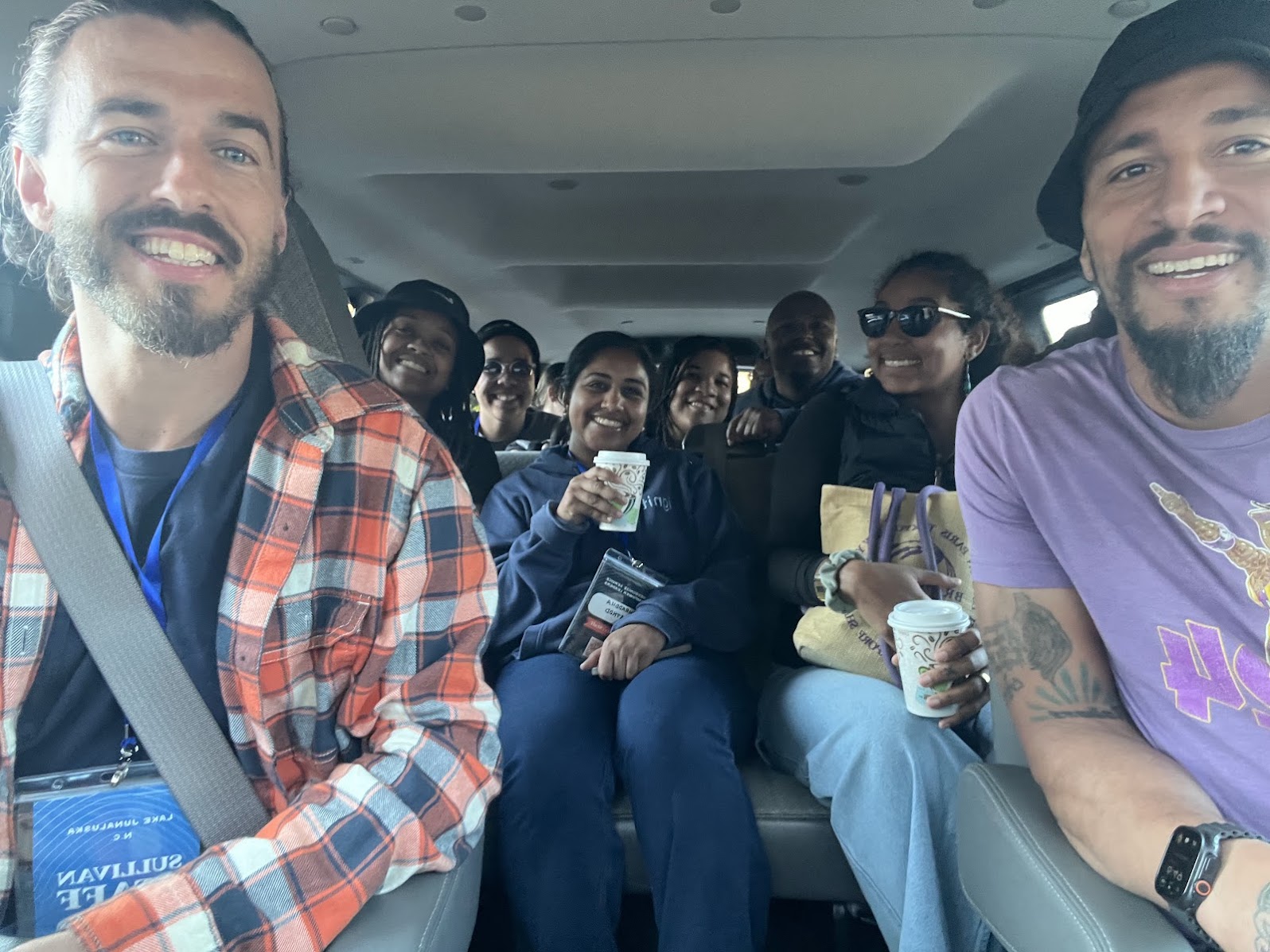
What deeper formation looks like in real time
If Ignite often feels like the beginning of a sentence, the Fellows experience feels more like the work of learning how to finish one. That is not because Fellows arrive with fewer questions. In some ways they arrive with more. But their questions have usually moved beyond simple discovery into responsibility: What kind of leader am I becoming? What do my values require? How do I carry conviction into relationship, community, and concrete contribution? How do I remain faithful when the work stops feeling novel and starts feeling costly?
The Foundation explains the Fellows path through the ARC Leadership Model, Agency, Relationships, and Contribution. It is a helpful way to describe what the program is trying to do because it resists the thin version of leadership that focuses mostly on self-advancement. Agency here means intentionality, self-awareness, and responsibility. Relationships means learning how to listen, collaborate, and build trust across difference. Contribution means moving beyond aspiration toward service, ownership, and tangible good.
Dr. Jody Holland, who is integral to Sullivan Fellows formation, said one of the most important takeaways from this spring was relational rather than performative. “One of the clearest takeaways from this spring’s Fellows Summit was the central role that relationships play in leadership development,” he said. That insight may sound obvious, but it is easy for institutions to forget. Programs often try to prove their seriousness by crowding the schedule. Sullivan, at its best, proves seriousness by giving people something substantial to talk about and enough trust to keep talking.
Why relationships were the story
Holland said many of the deepest moments of engagement occurred during reflective discussions in which students explored questions of purpose, service, and leadership in their own lives. In his words, “Many of the deepest moments of engagement occurred during those reflective discussions where students explored questions about purpose, service, and leadership in their own lives.” That sentence captures something essential about the Fellows experience. Students are not merely asked what they want to do. They are asked who they are becoming while they do it.
This spring also felt more authentic and relational than some earlier gatherings, according to Holland. “Students appeared more willing to engage openly with one another, share personal experiences, and explore deeper questions about leadership identity and purpose,” he said. He also noted that there was a better balance between structured programming and room for organic conversation, and that many participants felt some of the most meaningful insights emerged informally rather than from a podium.
That is one reason relationships deserve more than sentimental mention in writing about Sullivan. In weaker leadership programs, relationships are often treated as a pleasant side effect. In strong ones, relationships are part of the method. Students learn who they are not only through introspection, but through accountability, challenge, encouragement, and the discovery that other people are carrying equally serious questions. A student who realizes they are not the only one trying to connect purpose with practice has already gained something durable.
The importance of breathing room
Holland also noted another change this spring, a better balance between structured programming and space for connection. “Many participants noted that some of the most meaningful insights emerged through informal conversations rather than formal presentations,” he said. That is not an argument against rigor. It is a reminder that formation often requires breathing room.
Several participants indicated that they learned just as much through informal conversation than they did through formal presentation. This suggests that the sessions did what good sessions should do: they opened doors students wanted to keep walking through after the official hour ended.
This is especially important in Fellows work. Deeper formation is not simply the accumulation of content. It depends on reflection, synthesis, and honest exchange. Students need time to compare notes, test language, ask follow-up questions, and discover where their own leadership habits are immature, generous, fearful, or growing. When a weekend leaves enough breathing room for these things to happen, the learning acquires roots.
What felt new this spring
What felt strongest about the Fellows Summit this spring was not a flashy redesign. It was the quality of student presence inside the room. Holland said students seemed more willing to engage openly, share personal experience, and explore deeper questions about leadership identity and purpose. That openness matters because the Fellows experience is meant to ask harder things than a first invitation asks.
There was also a healthier rhythm to the weekend. Fellows had enough structure to be challenged and enough breathing room to keep thinking after the sessions ended. That balance can sound like a scheduling note, but it was really a statement about method. A summit devoted to formation has to leave room for reflection, for testing language, for the kind of honest follow-up conversation that makes a concept stick.
What comes next for Fellows
Between now and the fall, Holland said the focus will be on deepening engagement with Fellows while listening carefully to student, faculty, and campus liaison feedback. “That feedback will help inform how future Sullivan Weekend gatherings are designed,” he said. In other words, the summit is not being treated as finished product but as living work that should keep learning from the people inside it.
One clear priority is to continue strengthening the relational elements students seem to value most. Holland said there is also “growing interest in expanding opportunities for Fellows to apply what they are learning through campus initiatives, service projects, and connections with program alumni.” That matters because formation becomes more durable when it is tested in actual communities rather than admired only in retreat settings.
That future-oriented emphasis fits the wider Fellows path. The summit is not meant to be a self-contained highlight reel. It is one stop inside a longer journey, one that asks students to carry what they learn back to campus, into organizations, into classrooms, and into the demanding ordinary places where leadership stops being theoretical.
Why this matters beyond the weekend
The easiest way to describe the Fellows Summit is to call it leadership development. But that phrase can become vague so quickly that it stops helping. Steve McDavid has been clear that the Foundation wants to avoid that blur. The work is not about generic status or résumé polishing. It is about a form of purposeful leadership grounded in service, community, and the public good.
Seen that way, the Fellows Summit becomes especially compelling. It asks students to treat formation as something more serious than personal branding. The questions are more demanding than that. How do you become dependable. How do you collaborate well. How do you serve without becoming self-congratulatory. How do you build something useful with other people. How do you remain steady once the weekend is over and campus life becomes loud again.
Those are the kinds of questions that attract the right kind of reader, participant, alumni mentor, and supporter. A student may read this and see a place where purpose is not merely admired, but practiced. An alum may see a chance to invest in the next generation of thoughtful leaders. A donor may see that they are not underwriting abstractions, but helping sustain a formation process students can carry home.
That is why this spring’s Fellows Summit deserves attention. Not because it was loud, but because it was deep. Not because it promised transformation as a slogan, but because it created conditions in which students could practice honesty, relationship, responsibility, and contribution together. In the end, that is what gives the work its staying power. A student may forget the exact title of a session, but people tend to remember the weekend when they began to feel that this kind of growth was not only admirable, but actually possible.
Back to all News items.