
A place that asks people to mean what they say
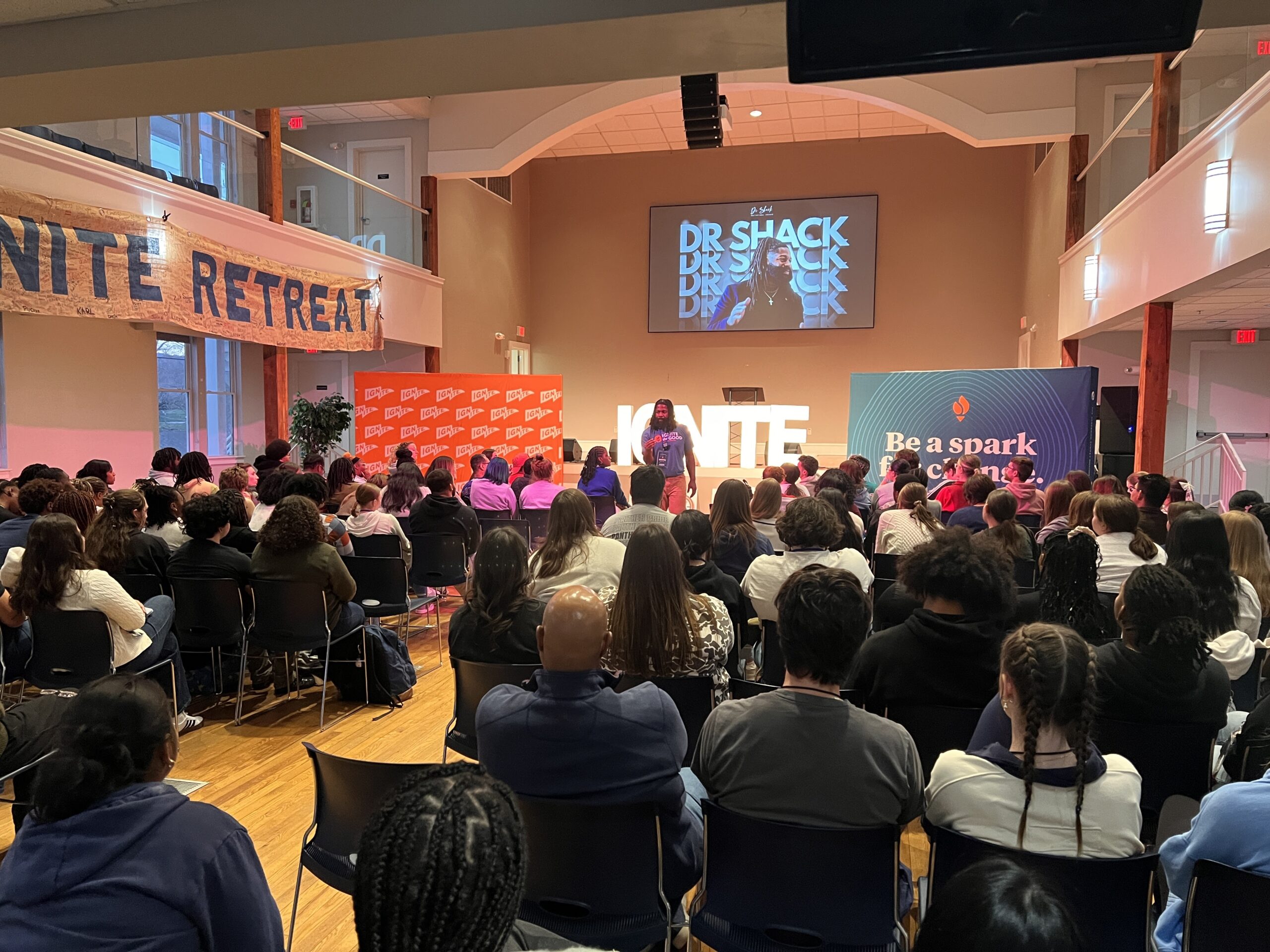
Lake Junaluska has a way of making people slow down just enough to tell the truth. The mountains don’t hurry anybody, and the lake doesn’t flatter anybody. People arrive with backpacks and tote bags, with notebooks half filled with questions and ideas. Then, over the course of a weekend, what looked at first like three parallel events begins to feel like one conversation told in different voices.
By all indications, this is what the March 27 to 29 Sullivan Weekend appeared to be this spring. Not simply a series of sessions, nor only a successful event from an operations standpoint, but a weekend in which engagement itself became the story. Steve McDavid, president of the Foundation, described it as one of the most engaged Sullivan Weekends the organization has seen since the pandemic era, with Ignite students, Fellows, and faculty all leaning into the work and not merely showing up for it. That matters because Sullivan Weekend has never been designed as a spectator event. It only works when people bring curiosity, honesty, and enough courage to be changed by one another.
For readers new to the Foundation, Sullivan Weekend is the umbrella gathering, not the name of a single program. Under that umbrella this spring were three distinct but related tracks: the Ignite Retreat for students who are beginning to identify purpose and direction; the Fellows Summit for students already engaged in a deeper arc of formation; and the Faculty Forum for campus partners working to strengthen the environments in which students grow. The Foundation has recently been trying to explain this architecture more clearly because the programs belong together, but they are not interchangeable. Each serves a different audience and a different stage of development, and the weekend works because it allows all three forms of work to happen at once without flattening them into sameness.
Why the weekend felt different this time
The most striking thing about this spring was not novelty for novelty’s sake. It was tone. Again and again, the people who helped lead the weekend described a stronger spirit of openness, attentiveness, and relational depth. Dr. Jody Holland noted that one of the clearest themes to emerge from the Fellows and Faculty Forum programming was the central role of relationships in leadership development. Students repeatedly said that the most meaningful aspect of the weekend was not just a specific session or exercise, but the chance to connect with peers from other campuses who shared similar values, ambitions, and questions. Those conversations continued long after formal programming ended.
That relational energy was visible in the broader weekend as well. Josh Nadzam, who oversees Ignite Retreat activity, put it plainly: “Events like this always hinge on how willing to participate the attendees are, and we noticed right from the very beginning that this was going to be a fun group.” He said students “opened up to us and each other quite quickly and were invested in making connections, learning, and being present.” That kind of readiness mattered because it shaped the entire atmosphere of the weekend, not just the Ignite track.
McDavid also pointed to encouraging patterns at the campus level. In his view, this was one of the most engaged Sullivan Weekends in recent memory. “Of any Sullivan Weekend I’ve been to since COVID, if not before, this was one where everybody seemed to be really engaged from the Ignite students to the fellow students to the faculty,” he said. He also noted the return of schools that had once been less involved but arrived this spring with larger delegations and greater enthusiasm. In his telling, some campuses did not merely attend. They came, as he put it, “all in.”
What each track is actually for
One of the Foundation’s most useful recent clarifications is also one of its simplest. Sullivan Weekend is a gathering place, while the programs inside it each answer a different need.
Ignite Retreat is often the entry point. The Foundation describes Ignite in practical terms: in two days, students gain clarity, confidence, and community to spark positive change. The retreat is structured around three tracks, Personal, Problem, and Project, so students can enter wherever they are. Some are still trying to name a calling. Some already feel burdened by a particular issue on campus or in the community. Some are trying to shape a concrete project into something more real. Ignite does not assume finished answers. It helps students take a next step.
The Fellows Summit asks more. It is not only about discovering what matters. It’s about becoming the sort of person who can remain faithful to what matters over time. The Fellows path is broader and travels through the ARC Leadership Model, Agency, Relationships, and Contribution. That framework is useful because it shows that growth is not random. Students learn to exercise self-awareness and responsibility, to work well with others, and then to turn those values outward through action and service.
The Faculty Forum is the parallel track that strengthens campuses from the inside. Faculty and staff gather not as observers on the margins of student programming, but as educators and campus leaders engaged in professional development, collaborative learning, and practical exchange. This spring’s forum was framed around community, content, and care. Its agenda included sessions on design thinking, self-awareness and social impact, and opportunities to observe Ignite and Fellows programming firsthand. In other words, the weekend did not treat faculty support as an afterthought. It treated it as essential infrastructure for long-term student growth.
The small changes that reveal larger truths
Sometimes the most revealing improvements are not dramatic. They are humane. One of the clearest examples this spring came from Ignite. Saturday night has often ended with a dance party, but the team also continued developing an alternative space for students who wanted to connect in a quieter way. Nadzam described it this way: “Our team created an alternative known as the ‘chill room,’ which has games, quiet activities, couches, and just a chance to continue connecting with others in a relaxed way. It’s been a big hit.”
That detail may sound minor until you understand what it says about the Foundation’s posture. The point was not to replace celebration with restraint. The point was to recognize that community deepens when more students have a way to belong. Some students process a full day of workshops by dancing. Others process by talking in smaller groups, playing games, or simply staying in the room long enough for the guarded version of themselves to soften. A healthy program makes room for both.
Jody Holland saw a similar shift in the Fellows and faculty experience. He described this spring as especially authentic and relational. “Students appeared more willing to engage openly with one another, share personal experiences, and explore deeper questions about leadership identity and purpose,” he said. He also noticed that some of the most meaningful learning happened when the schedule loosened enough for people to keep talking after the formal program had ended.
Why this weekend still matters to students, faculty, alumni, and supporters
A skeptical outsider might ask what difference a weekend can really make. The answer, if Sullivan is doing its job, is that a weekend does not become important because it changes everything at once. It becomes important because it helps people name the next thing of value.
For students at Ignite, that may be the first moment they realize purpose can be practiced rather than merely admired. For Fellows, it may be renewed accountability to a longer path of character, responsibility, and contribution. For faculty, it may be a stronger assignment, a better mentoring instinct, a new colleague to call, or a clearer sense of how to support students who are trying to connect learning with service and the public good. For alumni and supporters, the weekend offers something else just as important: evidence that the Foundation’s work is not abstract. It is tangible, relational, and repeatable.
This is why the weekend should matter to donors and underwriters as much as it matters to participants. Funding a student for Ignite is not just paying for room and board. It is opening a door into a network, a language of formation, and often a longer path into programs like Fellows, Service Corps, or the Impact Prize. Supporting faculty participation is not just a courtesy. It strengthens the adults who return to campus ready to mentor and challenge students more effectively. The public-facing narrative may begin with scenic mountains and a full room, but the deeper story is about what those experiences make possible once everyone returns home.
What comes next
The future for Sullivan Weekend appears likely to include both depth and distribution. Ignite leaders are already exploring ways to stay connected with students between retreats, involve alumni and former participants as coaches or support staff, and continue offering mini-Ignite experiences in smaller formats. Fellows leadership is listening closely to students, faculty, and campus liaisons, looking for ways to build more application between gatherings through campus initiatives, service projects, and alumni connection. The Service Corps continues to develop as a concrete next step for students ready to move from reflection into mission-driven work with real stakes.
All of which is to say that Sullivan Weekend is not standing still. But its future will be strongest if it resists the temptation toward mission creep and instead keeps sharpening what each program is for. This spring suggested that the Foundation understands that. The atmosphere was warm, but the goals were clear. The weekend made room for beginnings, for deeper formation, and for the faculty partners who help sustain both.
By Sunday, the lake looked as it always does, calm, patient, and older than everybody gathered around it. Yet the people leaving were not quite the same as the ones who had arrived. That is the quiet promise of a good Sullivan Weekend. Not spectacle. Not noise. Not a weekend remembered only because it was pleasant. A weekend remembered because something in it became usable, and because the work it began now has somewhere to go.
Back to all News items.