Most promising ideas arrive in ordinary fashion. They begin as a sentence written in the margin of a notebook, a frustration mentioned after class, or a question that keeps returning: Why does this problem continue? What if we tried something different? Who is already working on it, and what would make their work easier?
Sullivan Impact Venture Labs builds on the former Impact Prize to help students and young alumni move from that first spark toward a practical, mission-driven initiative. The pathway combines recognition in five issue areas, an accelerator experience, and the opportunity to pitch at the Sullivan Showcase. At each stage, the challenge is the same: turn concern into a credible plan.
Money matters. It can fund a pilot, purchase equipment, support outreach, or provide the runway needed to test an approach. But the strongest applications are not defined by how quickly a team can spend an award. They are defined by clarity, evidence, and the ability to explain why a particular response fits a particular need.
So what makes an idea strong?
Begin with the need, not the solution
A weak application falls in love with its answer before it understands the question. A strong application shows that the team has taken time to learn how the problem is experienced, who is affected, what has already been tried, and why a gap remains.
This does not require a graduate thesis. It does require more than intuition. Teams can speak with community members, review credible research, observe existing programs, and learn from organizations already working in the field. The goal is not to prove that no one has ever noticed the problem. The goal is to understand the need well enough to contribute responsibly.
The existing Sullivan application framework names this first quality simply: “Need.” As the program evolves into Impact Venture Labs, that remains a useful starting point. Applicants should be able to describe the challenge in language that is specific, grounded, and human. A reader should know whose life could improve and what stands in the way now.
Build a strategy that matches the problem
Once the need is clear, the strategy should feel like a considered response, not a collection of activities. If the problem involves access, how will the initiative remove barriers? If it involves trust, who already holds trusted relationships? If it involves information, why is the information not reaching people now?
A persuasive strategy is supported by evidence. That evidence may come from research, interviews, a small pilot, early participation, letters of interest, or a partnership already taking shape. A new idea will not have years of results, but it should have a reasoned basis for believing the approach can work.
This is where many teams benefit from making the first version smaller. A pilot serving 25 people well can teach more than an ambitious promise to reach 25,000 without a credible plan. The purpose of a pilot is not to make the idea look small. It is to make learning possible.
Name the change you expect to see
Strong applicants can describe a “Target Outcome.” That does not mean predicting the future with false precision. It means identifying the change the team will watch for.
Outputs describe what the team does: workshops held, meals delivered, students trained, or gardens installed. Outcomes describe what changes because of that activity: stronger knowledge, improved access, greater confidence, reduced waste, or increased financial stability. Both are useful, but they are not the same.
A team should ask: If this works, what will be different for the people we hope to serve? How will we know? What can we measure in the first six months, and what may take longer to understand?
The answer can include numbers and stories. A count shows reach. A conversation may reveal why a participant stayed, returned, or changed course. Together, those forms of evidence give the team a more honest picture.
Show that the team can learn
The “Team” criterion considers relevant strengths and experience, but applicants should not mistake this for a demand that everyone already be an expert. A student team can be compelling precisely because its members know what they do not know and have built relationships with people who can help.
Explain why the team cares about the issue, what skills members bring, and where guidance is needed. Identify advisors, campus partners, community organizations, or people with lived experience who will shape the work. Judges are not only evaluating today’s résumé. They are evaluating the team’s capacity to listen, adapt, and follow through.
That capacity often appears in the way an applicant discusses uncertainty. Every early-stage idea contains assumptions. Strong teams name them. They can say, “We believe this group will participate, and here is how we plan to test that belief.” They do not present confidence as omniscience.
Explain why Sullivan support matters now
Another criterion asks applicants to describe the “Value of Sullivan.” This is more than a request for a check. Teams should explain how funding, guidance, and the Sullivan network would change the trajectory of the work.
Would the award make a pilot possible? Would it allow the team to gather better evidence, establish a partnership, reach a new population, or move from volunteer effort to a more durable model? What milestone could be achieved with Sullivan support that cannot be achieved at the same pace without it?
Specificity makes the answer believable. A budget should connect directly to the strategy. If a line item does not help the team test, deliver, measure, or sustain the work, ask whether it belongs.
Let commitment appear in the details
The final criterion, “Commitment,” is not best demonstrated by declaring passion repeatedly. It appears in preparation. It is visible in the interviews already completed, the questions considered, the partner who has agreed to participate, and the budget revised after new information arrived.
Commitment also means staying close to the people affected by the work. Community members should not appear only as beneficiaries in an application. Whenever possible, they should help define the problem, shape the response, and assess whether the initiative is useful.
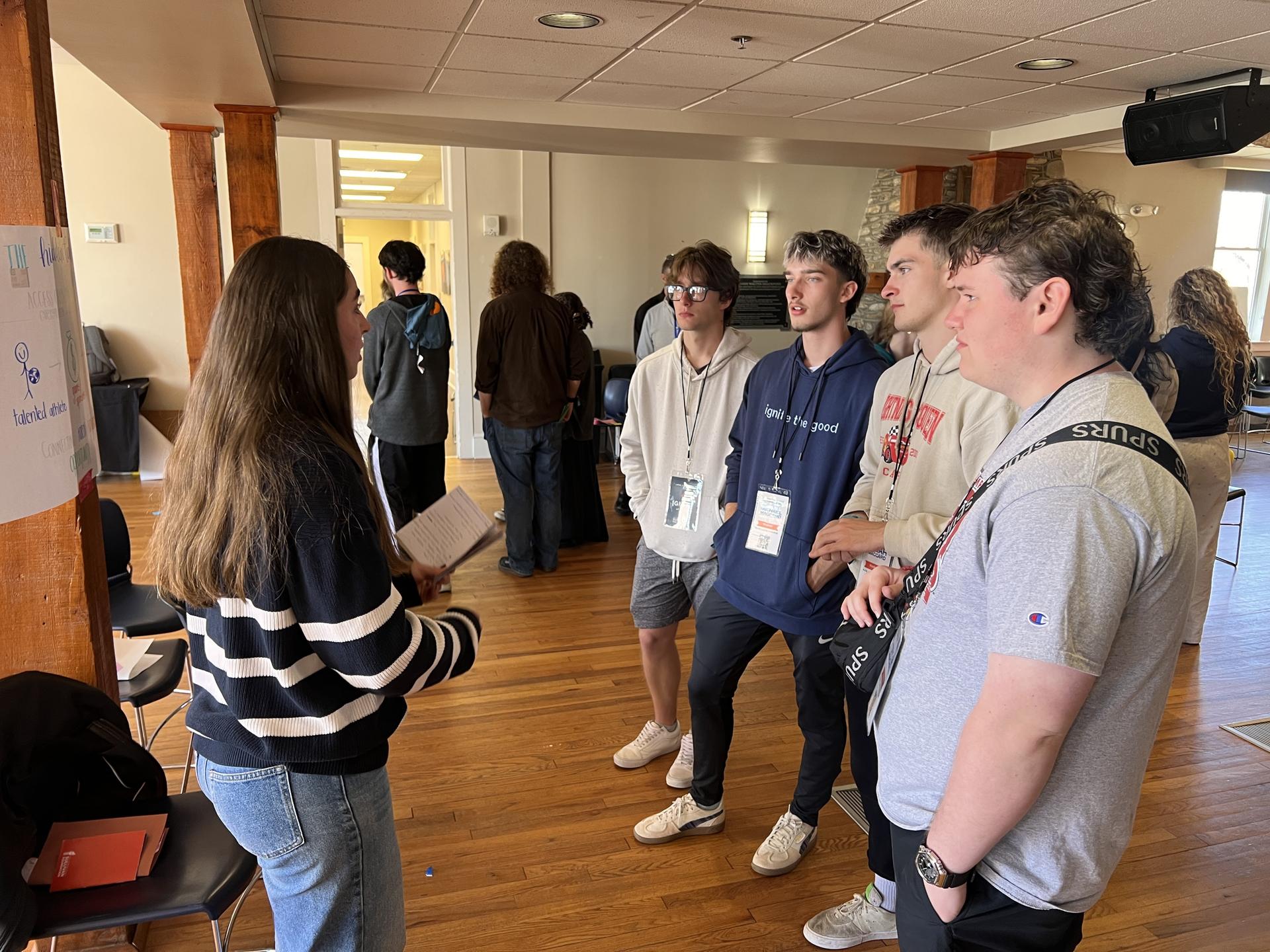
One Ignite participant described a breakthrough as “the change from thinking and planning to creating action and impact.” That movement is at the heart of Sullivan Impact Venture Labs, but action should not be confused with hurry. The best next step is the one that produces useful learning while honoring the people the work is intended to serve.
Another student described the thrill of “building an idea from scratch, defining it, and sharing it.” Sullivan Impact Venture Labs invites that courage, then adds a second invitation: define the idea clearly enough that other people can examine it, strengthen it, and decide to join.
A useful test before you submit
Before completing an application, a team should be able to answer six questions in plain language:
-
- What need are we addressing, and how do we know it is real?
-
- Who is closest to the issue, and how have they shaped our thinking?
-
- What will we do first?
-
- What change do we expect, and how will we learn whether it happened?
-
- Why is our team prepared to begin, and where do we need help?
-
- What would Sullivan support make possible now?
If the answers are clear, the application is likely becoming stronger. If one answer remains vague, that is not a reason to abandon the idea. It is a signal about where to learn next.
The most persuasive Venture Labs application does not promise to solve everything. It demonstrates that a team understands something important, has designed a credible first response, and is ready to learn in public. It combines ambition with discipline. It treats the community as a partner. It leaves reviewers with a sense that the applicants will use both opportunity and feedback well.
Under the current Venture Labs structure, a winner in each of the five issue areas will receive $500 and advance to the accelerator. Other participants may pitch at the accelerator for a wildcard place, joining those five winners at the Sullivan Showcase. The six teams will then compete for a $2,000 grand prize. All six may apply for up to $10,000 in follow-up funding. Application dates and final participation details will be announced through Sullivan.
Back to all News items.