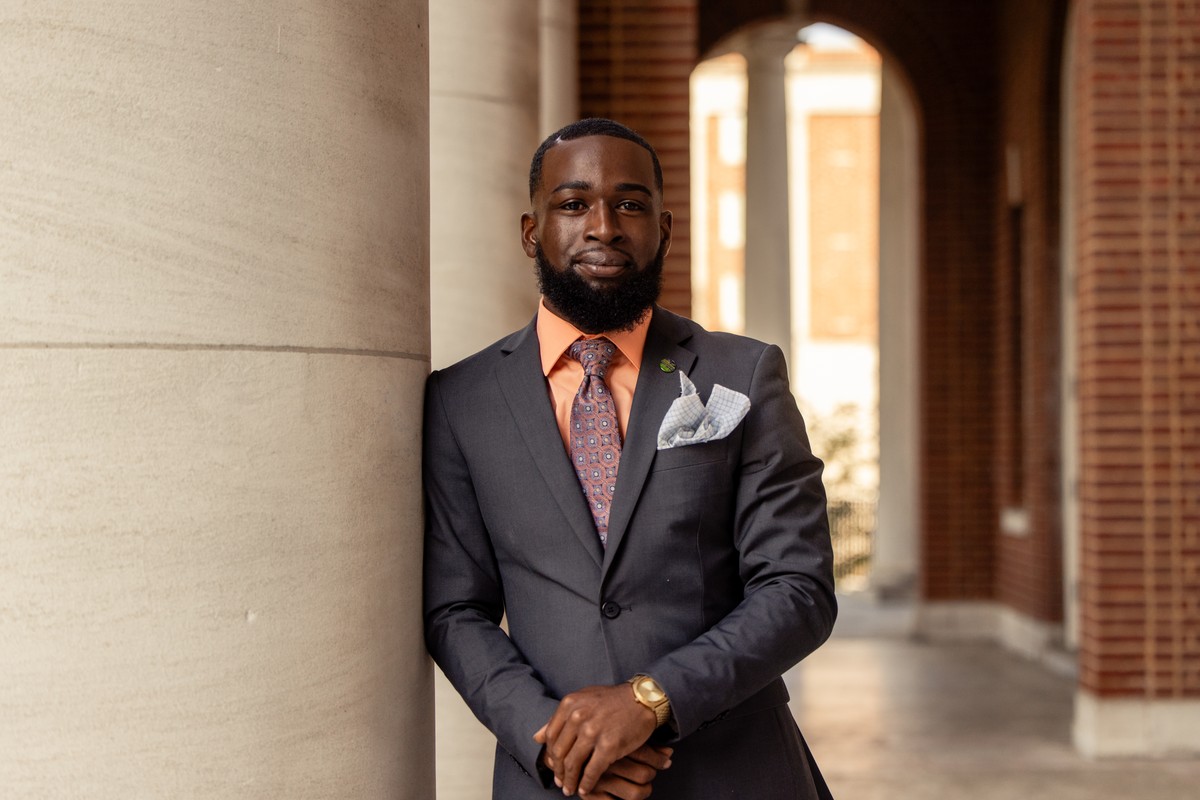
Bobby Hudson describes himself as “born, bred, and buttered” on the Mississippi Gulf Coast. The phrase has the ease of something said at a family table, but it also tells you something important about the way he understands leadership. Place is not a backdrop in Hudson’s story. It is a source of responsibility.
The Gulf Coast has taught generations of residents that a community can be beautiful and vulnerable at the same time. Storms arrive. Economies shift. Young people decide whether to stay, leave, or return. Organizations are often asked to do more than their budgets suggest is possible. In that setting, leadership is less about possessing a grand title than about becoming the person who can be counted on when a need becomes visible.
Hudson has built his work around that kind of presence. A graduate of the University of Mississippi, he is the founder and chief executive officer of Hudson & Company, Inc., a leadership consulting agency whose work spans youth development, civic education, nonprofit leadership, and political engagement. He has also served Sullivan students as a former Ignite participant and as a Year One co-lead in the Sullivan Fellows Program.
His personal motto is “to exemplify the standard of servant leadership.” The verb matters. Hudson does not say merely that he wants to explain servant leadership, endorse it, or put it on a slide. He wants to exemplify it. The standard must become visible in the choices a person makes, especially when no audience is present.
That emphasis fits naturally with the Sullivan Fellows Program. Fellows is a multi-year leadership experience for students at Sullivan partner schools. The program helps students develop agency, build relationships across difference, and make meaningful contributions on their campuses and in their communities. Participants gather during Sullivan Weekend, work with coaches and peers, and continue the learning through a cohort experience that stretches beyond a single event.
Hudson brings to that work an understanding of leadership as both inward discipline and outward obligation. A student may have enthusiasm, intelligence, and a strong idea, yet still need to learn how to listen without preparing a rebuttal, how to make room for another person’s contribution, and how to act consistently when recognition is unlikely. These are not small refinements. They are the habits that determine whether other people can trust a leader.
Trust is especially important in youth development. Young people are quick to notice the gap between what an adult says and what that adult does. A workshop can introduce a concept, but credibility is built over time. It appears in whether someone follows up, remembers a promise, admits a mistake, and returns after the first burst of excitement has passed.
That is part of what makes Hudson a compelling guide for Fellows. He understands the energy of being a student with a new sense of possibility because he has occupied that seat. He also understands the responsibility of helping other students move beyond possibility into practice. The distance between those positions is measured not only in years, but in experience, reflection, and repeated service.
For Fellows, seeing an alumnus of Sullivan programming return as a leader changes the meaning of the program. It demonstrates that the weekend is not an isolated experience. A student can arrive with questions, learn alongside peers, carry the lessons into a career and community, and later become the person who welcomes the next cohort. The circle is one of Sullivan’s quiet strengths. Leadership is received, practiced, and passed on.
Hudson’s work also resists a common misunderstanding about service. Service is sometimes treated as a single generous act, something added to a résumé after the important work is finished. Servant leadership asks more. It requires a person to consider whose interests are being advanced, whose knowledge is being respected, and whether a decision leaves a community with greater capacity than it had before.
That kind of leadership can be firm. It can set expectations, make difficult choices, and ask people to be accountable. Service does not mean avoiding conflict or agreeing with everyone. It means that authority is exercised for a purpose larger than the leader’s comfort or status.
The Sullivan Fellows Program gives students a place to test those ideas with people who are doing the same work. The cohort includes students from different campuses, regions, fields of study, and personal histories. Those differences create a laboratory for leadership. Students discover that a phrase that feels clear on their own campus may sound unfamiliar somewhere else. They learn to explain an idea without assuming agreement. They practice receiving a question as an invitation to think more carefully.
The program’s ARC framework gives structure to that growth. Agency asks students to understand their values, choices, and capacity to act. Relationships ask them to build trust and collaborate across difference. Contribution asks them to put what they have learned to work in the world. The order is deliberate, but the process is not perfectly linear. Every contribution teaches something new about agency. Every difficult relationship reveals another part of the self.
Hudson’s Gulf Coast roots give that framework a human scale. Community is not an abstraction. It is the young person deciding whether leadership belongs to them. It is the neighborhood organization trying to stretch limited resources. It is the civic conversation that becomes more useful when someone listens carefully enough to ask a better question.
It is also the person who keeps showing up.
The strongest mentors do not offer students a polished image of leadership that excludes doubt or struggle. They show that growth is possible because the work can be practiced. Confidence can deepen. Judgment can improve. A person can become more aware of the effect they have on others. A student who once needed an invitation can learn to extend one.
Hudson’s story embodies that progression. He has moved from participant to practitioner to guide while remaining connected to the place that formed him. His work with young people, nonprofit organizations, and civic leaders reflects a belief that communities become stronger when more people are prepared to lead with both courage and care.
That belief is at the center of the Fellows Summit. Students do not gather simply to collect information. They gather to become more capable of using what they know in service to others. They leave with language for their values, relationships that extend beyond their campus, and a clearer sense of the contribution they are ready to make.
The 2026 Sullivan Fellows Summit will take place October 9 through 11 at Lake Junaluska, outside Asheville, North Carolina, as part of Sullivan Weekend.
Back to all News items.